In the world’s largest tropical rainforest reserve, the Amazon Sustainable Development Foundation has introduced the XG18E mini excavator, a rainforest-specific model, for ecological trail maintenance and research facility construction. Under the supervision of UNESCO, all mechanical equipment entering the reserve must meet a “zero-impact” standard – meaning no damage to the topsoil, no disturbance to animal habitats, and no introduction of foreign pollutants.
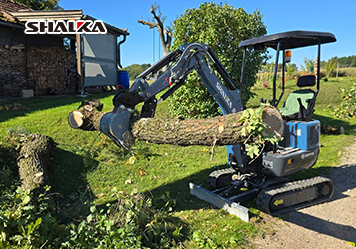
“We searched for three years to find the right equipment,” whispered Dr. Carlos Silva, the reserve’s chief ecologist, as macaws perched in the trees nearby. “The XG18E’s low-frequency vibration mode keeps noise below 45 decibels, and its specially designed rubber tracks exert less pressure on the ground than a human footprint. Most ingeniously, its ‘canopy concealment’ design makes it difficult for even drones to detect the equipment from the air during operation.”
This equipment, jointly developed with the Brazilian National Institute for Amazonian Research, incorporates multiple ecological patents: a bionic chassis design reduces ground disturbance by 90%, an electric silent system ensures that animal behavior within a 50-meter radius remains unaffected, and the entire machine uses biodegradable lubricants. In the initial 15-kilometer ecological trail restoration project, the equipment increased construction efficiency to 20 times that of manual labor without affecting canopy-level biological monitoring.
The Brazilian Ministry of Environment has designated this case as a benchmark project for “intelligent rainforest conservation,” and representatives from seven Amazon basin countries have visited to observe. Xiaogang South America is now developing a series of environmentally friendly equipment based on this platform, suitable for special ecological zones such as swamps and mangrove forests, with initial orders already placed by nature reserves in Peru, Colombia, and other countries.